The Undercut Racing Manager Driver tier list
Rank the seat, not the famous helmet, in a generated 1990s grid.
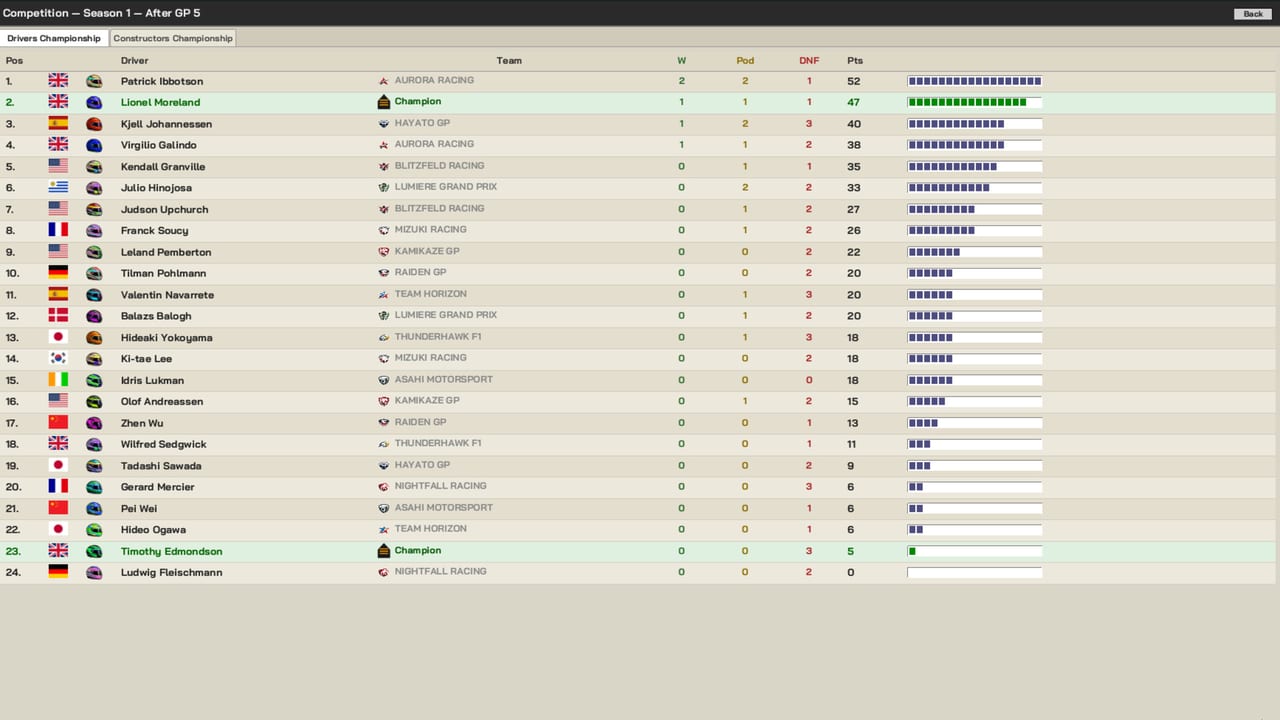
This driver tier list is a hiring rubric for The Undercut: Racing Manager. Your career will not contain the same names as anyone else’s. Rank profiles: the mix of stats, traits, age, ambition, and salary that makes a Primary seat, a teacher Secondary, a useful Reserve, or a mistake.
Scout before you use any grade. The method is on scouting. Trait cards are on driver traits. Juniors are on the academy.
S — build the team around them
S-tier is a driver you would spend a buyout on. Typical picture: high INT and CON, PAC that belongs in the top third of your series, ambition that matches your factory, and at least one green trait that plays with your car character (tyre whisperer on a cliffy Soft, late braker on a stable brake package — not the opposite).
Age window: peak years, or a 21-year-old development graduate who already has feeder wins. A 34-year-old champion can still be S for one season if STA is honest and you are buying a title, not a future.
Do not call someone S because Fame is 90. Fame is public and cheap to read. S is what remains after 90%+ knowledge.
A — first-team quality
A-tier wins races in a good car and scores in a midfield car. Slight gaps versus S: one weak stat, a yellow trait you can live with, or salary that stresses a Small budget. Many “star” free agents land here once you un-blur them.
A-tier Secondaries are underrated. A high-INT number two who accepts the role will execute race strategy without needing team orders every week. A-tier does not need to be the marketing face.
B — points and growth
B-tier is the spine of a Medium career: mid-PAC, honest CON, manageable salary, ambition that will not explode when you finish eighth. Feeder standouts who are not yet complete live here. So do veterans who no longer take a Primary at a top team but will teach a junior.
B is the correct grade for a driver you have only scouted to ~50%. The band is still wide. Finish the observation before you promote them to A in your own notes.
C — depth
C-tier fills Reserve, Friday mule seats, and short-term injury cover. Low fame is fine. Low CON plus Soft tyres is not fine — park them on Hard, as the pit strategy tool suggests. Pay drivers can be C with a green finance overlay: they drop a letter as racers and rise as a budget tool.
C-tier hot heads in a fragile car become D. Context demotes.
D — only with a plan
D-tier is a famous name with hollow stats, a red-trait cheap contract, a high-ambition driver who will refuse your seat after one year of pain, or a 16-year-old you cannot legally put in the main series yet. The last one is not a bad human; they belong on loan via the academy until the 18+ rule and the GP-10 window say otherwise.
Signing D-tier because they are from your country is a tax you pay for flavour. The country bonus on offers is real and small. It does not turn a mule into a winner.
Seat-by-seat cheat sheet
- Primary — S or A. Match car character. If the car is nervous, INT matters more than PAC.
- Secondary — A or B with role acceptance. Avoid stars who want Primary and will sulk.
- Reserve — B or C who can actually start. Injuries last one to five Grands Prix in the launch build. An empty third seat is how championships die in May.
Split strategies work when Primary is a points defender on Hard-first and Secondary is the undercut weapon on a two-stop. That only works if the Secondary has the CON to survive Soft. Grade the pairing, not the isolated helmets.
Market timing
Pre-season is for finishing observations and using the offer quota. In-season, the AI poaches. GP-10 is for next-year deals and for 17-year-olds who will age in. Do not burn the quota on a driver who already closed the door.
The talent pyramid in 0.5.3 means a few elites and many journeymen. Your S-tier shortlist should be short. If you have twelve S names, you are grading on fame again.
After you hire
Keep scouting the feeders. Knowledge of your own drivers is already 100%. Spend the pool on the next unknown, not on polishing a rating. If a new red trait appears, decide fast: design the car to forgive them, park them on safer compounds, or replace them at the next window. The parts tier list will not save a hot head who keeps binning the front wing.
Use this list at the market. Use practice data on Sunday. The grid you rolled is yours; the grades are how you refuse to be impressed by a helmet.
Frequently Asked Questions
Quick answers for pitwall decisions, scouting, and career systems.
Is a 90 fame driver always A-tier?
No. Fame is public. Grade after scouting. Many famous names land in B or D once stats exist. See scouting.
Where do academy graduates sit?
Usually B with S upside if feeder results and traits agree. The academy page covers loans and the 18+ rule.
Should both race seats be S-tier?
Only if cash and ambition allow. A common winning pair is S Primary and A/B Secondary who accepts the role.
How do injuries change the list?
They make Reserve real. A C-tier Reserve who can start beats an empty seat. Launch build injuries last one to five Grands Prix.