The Undercut Racing Manager Driver traits and red flags
Personality on top of INT, PAC, CON, ADA, STA, and AGG.
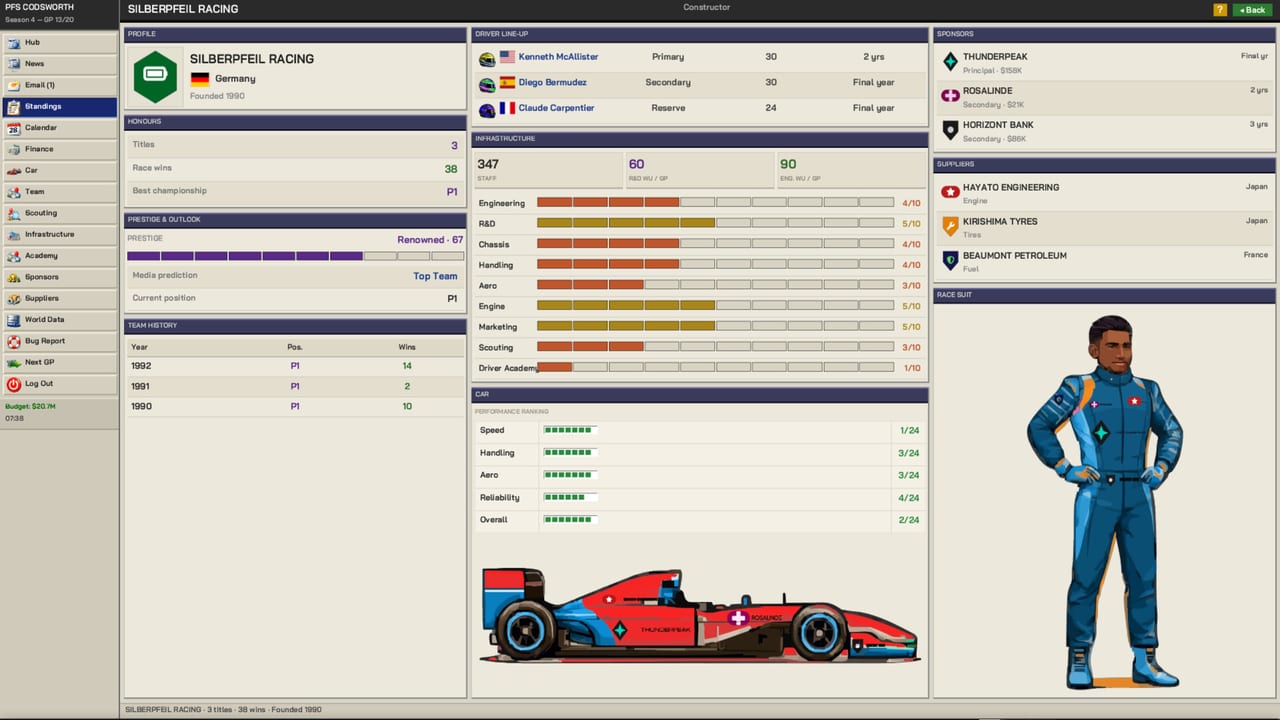
Stats tell you the size of the driver. Traits tell you the shape. The Undercut: Racing Manager hides both until scouting knowledge arrives, then staggers traits in as suspected cards before they confirm. A cheap signing with red traits is the sentence on the Steam page for a reason.
This page is a field guide. Use it with scouting and the driver tier list. Car-side traits — Overweight, Ground Effect — live on car development. Do not mix the two lists when a practice card pops.
How traits show up
Traits unlock across the knowledge climb. With three traits, you might confirm the first around a quarter, the second at half, the third at three-quarters, with suspected cards in between. At 100% everything is named with polarity, duration, and effect lines. Stop observing at “good enough stats” and you can still miss the hot head.
Your own drivers are fully known. Free agents are not. Fame never substitutes for a trait card. A household name can still be a late braker on a lockup-prone car.
Green shapes (usually)
Tyre whisperer. Extends the useful life of a compound and makes Soft cliffs less lethal. Pairs with aggressive race strategy and with tyre suppliers who are only average. Still not a reason to ignore punctures at 100% wear.
High intelligence behaviours. Out-laps, fuel save, lift-and-coast efficiency. The stat is INT; traits in this family amplify the pitwall’s ability to trust a plan. Put these drivers on custom strategies and on nervous high-ceiling cars.
Iceman / cool-head types. Pressure and mistake resistance. They make B-tier cars finish. They will not invent PAC you did not buy.
Late braker (conditional green). Gains time on stable brakes and passing venues. Becomes red on a lockup-prone Handling package or a High Drag nervous car. Always read next to the brake trait on the machine.
Red shapes (usually)
Hot head. Aggression without the CON to hold it. Overtake Push on this driver is how you write off a front wing. Park them on Hard for the long stint, forbid heroic two-stops, or do not sign them.
Fragile stamina. Long races and hot calendars destroy them. Fine in sprints. D-tier as a season Primary.
Lockup / wheelspin magnets. The trait name varies; the debrief does not. They need conservative engine maps and a Handling department that is not an afterthought.
Ambition mismatch. Not always printed as a trait card, but the profile’s signing target behaves like one. A driver holding out for a top team will not become happy in your Small factory because you added a joke clause.
Pairing with the car
The Car Character panel exists so you stop treating drivers as plug-in overalls. A forgiving mule wants a B-tier consistent driver who will finish. A high-ceiling, high-drag, overheating diva wants a high-INT whisperer and a lot of Engineering Work Units. Swap seats after a trait discovery weekend; practice data follows the car, so you are not throwing the kilometres away.
Team orders — stay behind, let pass — are how you stop a hot-head Secondary from racing your points-leading Primary into a double DNF. Bind them in your head with the controls page so you actually press them.
Academy prospects
Juniors roll traits too, and you see them at 100% because you own them. That is the academy’s hidden gift: you can refuse to graduate a red-trait kid into the race seat. Loan them, let them age, or let them go. Do not promote on PAC alone. The academy page covers slots and loans.
Using traits on the pitwall
Before the race, look at compound versus whisperer versus CON. During the race, look at mistake commentary. After the race, look at whether the red trait cost a wing you must now Repair instead of Improve. Traits that keep costing parts are not personality; they are a market problem for GP-10.
If a guide or a video tells you a single trait is always meta, ignore it. The grid is generated. The pairing is the meta. Keep this page beside the parts tier list so you never again drop a late braker onto lockup-prone brakes and call it unlucky.
Frequently Asked Questions
Quick answers for pitwall decisions, scouting, and career systems.
When do I see a driver's traits?
As scouting knowledge climbs. Suspected first, then confirmed. Own drivers are fully visible. See scouting.
Is late braker always good?
No. It is green on stable brakes and red on lockup-prone cars. Read it with car development.
Should I fire a hot head after one crash?
Not after one. If the trait plus the car keeps binning parts, replace them at the next window. Keep a Reserve.
Are car traits the same as driver traits?
No. Overweight and Ground Effect are parts. Tyre whisperer and hot head are people. Practice cards can be either — read the heading.