The Undercut Racing Manager Tier lists for a generated grid
Drivers and parts — rankings that survive a procedural career.
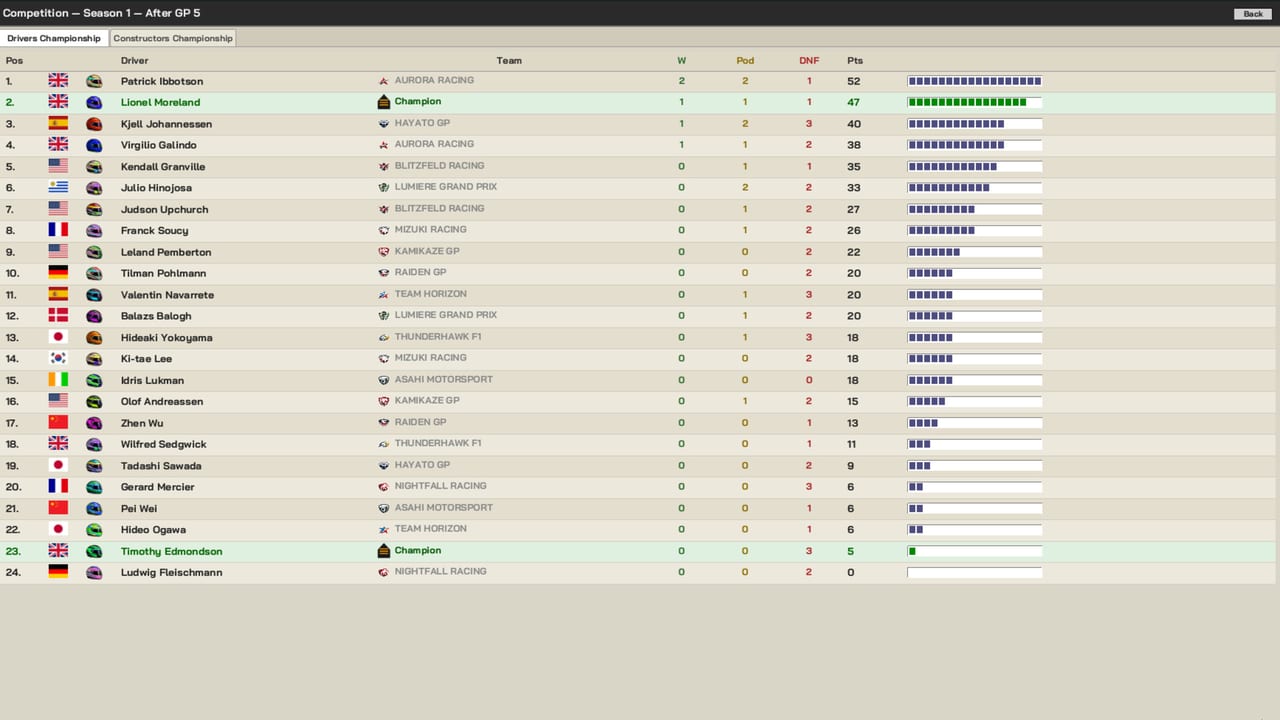
The Undercut generates a new world every career. There is no locked 2026 driver market to copy from a spreadsheet. A tier list here is a set of rules for reading whatever grid you rolled: which driver shapes take a Primary seat, which part departments pay first, and which famous names you should still scout.
Open the driver tier list when you are hiring. Open the parts tier list when you are spending Work Units. Both assume you already know the loops on scouting and car development.
Why a generated game still needs ranks
Players search “tier list” because they want to stop guessing. In this sim the guess is expensive: a three-year contract, a factory level you cannot unwind until next pre-season, a Soft cliff you cannot un-pit. Ranks on this hub are about roles, not proper nouns.
A high-intelligence, high-consistency driver on a nervous high-ceiling car is S-tier for a title fight. The same overall number on a hot head in a mule is a DNF machine. A Lightweight floor with Low Drag is S-tier on a power circuit and merely fine on a street venue. Context is the rank.
Fame never hides. Ability does. If you only remember one line from this hub, remember that. The Drivers hub exists so traits and the academy have their own rooms.
How we grade
- S — Build around this. Pay the buyout, finish the observation, or dump Work Units here.
- A — First-team quality. Worth a Principal-level salary or a specialist department level.
- B — Solid points car or a part you Improve after fires are out.
- C — Depth, reserves, or a department you touch when money is easy.
- D — Only with a plan: pay driver cash, a trait you can design out, or a mule for Friday.
These grades move when a patch rebalances wear, scouting output, or prize money. 0.5.4 already did all three. Recheck updates after a headline drop.
Drivers at a glance
Prioritise scouting targets in this order: unknown high-ceiling juniors in the feeders, then grid drivers whose fame is lower than their suspected pace, then veterans you need for one title year. Avoid signing on the Fame column. Avoid offering Reserve to a star. Keep a real third seat because injuries are in the launch build. Full reasoning: driver tier list and driver traits.
Parts at a glance
Marketing and Engineering outrank vanity Aero. R&D waits until you hit the ceiling. Aero and Handling are the specialist pair that move lap time. The Engine department does not build engines. Hidden negative traits on a “green” part drop it a letter until you redesign. Full reasoning: parts tier list.
How to use a tier list on a Sunday
Before the weekend, look at the car character and the driver in the seat. A late-braker on a lockup-prone brake package is not an A-tier pairing even if both pieces looked strong in isolation. During the race, do not let a D-tier compound plan — a Soft stint into a cliff — override the letter on the driver. Race strategy still wins Sundays.
After the weekend, spend Work Units on the part that actually failed, not the part that sits highest on a generic list. Then, if a driver showed a red trait, decide whether the academy or the market replaces them at GP-10.
This hub will not name a single generated driver as eternal S-tier. If a page on the internet does that for your unique career, it is guessing. Use rules. Scout. Then spend.
Frequently Asked Questions
Quick answers for pitwall decisions, scouting, and career systems.
Why are there no named S-tier drivers?
Every career rolls a new pool. We rank profiles and roles. Apply them with scouting.
Should I follow this list or practice data?
Practice data wins. The list tells you where to look. The car you measured on Friday is the car you race. See car development.
Do patches shuffle the tiers?
Yes. 0.5.4 already changed scouting output and factories. Read 0.5.4 notes after you come back from a break.