The Undercut Racing Manager How to qualify in The Undercut
Thirty minutes, Soft compound, and a grid that decides the undercut.
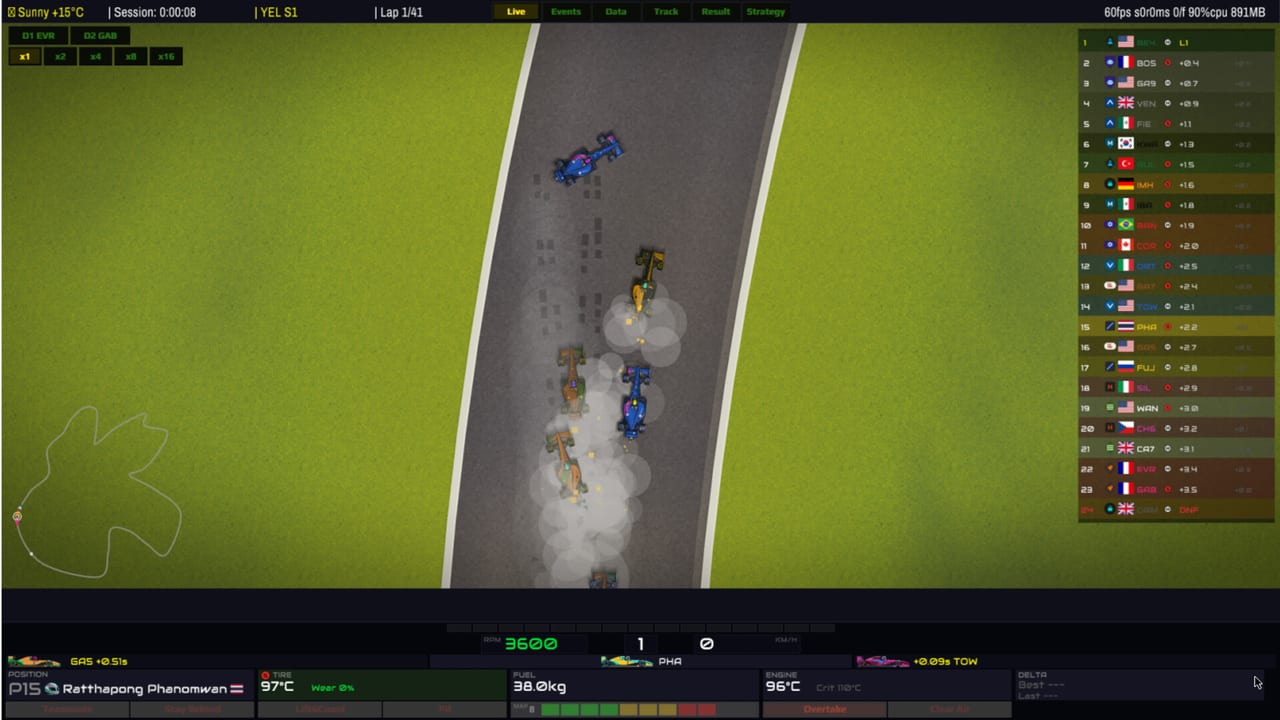
Qualifying in The Undercut: Racing Manager is a thirty-minute session you can watch or simulate, and it is not a formality. Grid position decides a huge slice of race outcome, especially on venues the circuits card labels Overtaking Difficult. This page is the how-to: compounds, stints, the 107% rule, and how quali feeds the race run plan.
If you have not finished GP 1, start with getting started. Race compounds and undercuts live on race strategy. This page stays in the garage lane between practice and lights-out.
What the session actually is
After free practice and any repair triage, you set a qualifying run plan per car, then the clock runs. You can launch as many stints as the thirty minutes allow. 0.5.3 added a manual Start Stint control and a Hot Laps stepper so a live session feels like a real quali, not a single automated lap. 0.5.4 made the qualifying run plan scroll with triggers on a pad.
Default first-career advice: Soft compound, multiple short stints, two hot laps each. You are not saving tyres for Sunday here. Soft is the quali tyre. Medium does not appear on current plans.
Watch the first quali at 1×. The timing tower — clickable since 0.5.3 — shows the field building times. You will sit bottom half on Small budget, midfield on Medium, top half on Large, unless the factory or the driver is a liar. Do not expect pole because the wizard felt generous.
The 107% rule
0.5.2 turned the 107% qualifying rule on. Too slow and you do not start. That is not flavour text. A mule with unresolved Overheating, a driver on Hard because you copied the race plan, or a simulated session you skipped entirely can put you outside the cut. If the car is damaged from practice, repair before you send them out. Car development is the factory side of that cut.
Banked times from a previous visit to the circuit do not save you. This weekend’s quali is this weekend’s ticket.
How to run a stint
- Measure in practice first. The race generator sizes A/B/C from your wear and fuel. Quali does not need a race stint length, but it needs a car that can put a lap together: tyre temp window, engine map you can live with, no pending “Stay out” from a confused pit call.
- Soft, out-lap, push. Cold tyres on the out-lap are real. The flying lap is the one that prints. A second flying lap is available if the compound is still in the window and traffic is clean.
- Traffic. Dirty air kills a flying lap the same way it kills a race stint. If the tower shows a train, wait. The stepper exists so you are not forced into a purple sector behind a mule.
- Engine map. Middle of the scale is the first-career default. Quali is not the place to discover that map 10 bricks the engine. Cooling is a lever after 0.5.3; overheating degrades instead of ending the session in one go, but a cooked engine still starts the race wounded.
- Both cars. Dual run plans. Do not park the second car in the garage to “save mileage” unless you already have a locked Q1 time and the 107% is safe. The second car is also your insurance if the first hits traffic or a spin.
Spins in quali are cheaper than they used to be: 0.5.1 stopped a wall brush from running the full crash pipeline. A spin still costs the lap. A crash still costs the car. Repair between quali and race if you must; the truck only holds what weekend loadout packed.
Live versus simulate
Simulate if you already trust the car and you are grinding a season. Watch if:
- It is GP 1.
- The circuit card says overtaking is difficult.
- You are on the edge of 107%.
- A hidden trait is still a suspicion, not a name.
Simulated practice used to blame the wrong driver; 0.5.4 fixed that. Simulated quali is less dramatic but it still consumes the session. You cannot skip the rule by hiding the camera.
How quali writes the race
Grid position is the start of every undercut conversation. P3 in a midfield car often wants Hard first to protect track position. P12 on a tyre-shredder wants the two-stop if it is offered. Letters A/B/C still rank by estimated race time, not by how angry you are about Q2. Read the compounds on the race card after the session, not before it.
Starting grid cards show the real pole time and the gaps. Use those gaps: a 0.4 s hole in front is an overcut candidate; a 1.8 s hole behind is an undercut you can take without the car behind covering. The pit strategy tool is the Sunday short form of that read.
Injuries can still hit in quali. The reserve starts the race if the flying lap ended in a crash-force roll. Keep the third seat warm; that is a Drivers hub problem as much as a quali problem.
First-career quali checklist
- Soft on both cars.
- At least two stints in the window if you are watching live.
- Do not copy the race one-stop onto the quali card.
- Repair obvious practice damage before the clock starts.
- After the flag, lock the race plan from practice data, not from the letter A.
- If 107% is close, you have a factory problem, not a bravery problem. Read car development.
Qualifying is how the pitwall earns the right to call an undercut. Skip it and the race is a traffic study. Run it and race strategy has a grid to work with.
Frequently Asked Questions
Quick answers for pitwall decisions, scouting, and career systems.
Should I qualify on Hard to save Softs?
No. Soft is the quali tyre. Save the race compounds on the race run plan. See race strategy.
What is the 107% rule?
Too slow versus pole and you do not start. It has been active since 0.5.2. A damaged mule or a skipped session can fail it.
Can I simulate qualifying?
Yes. Watch GP 1 live. After that, simulate if the car is honest. The 107% cut still applies.
Does grid position really matter that much?
On Difficult overtaking venues it is most of the race. Read the circuits card before you auto-pilot the session.