The Undercut Racing Manager Scout them first
Hidden stats, observation missions, and offers that actually stick.
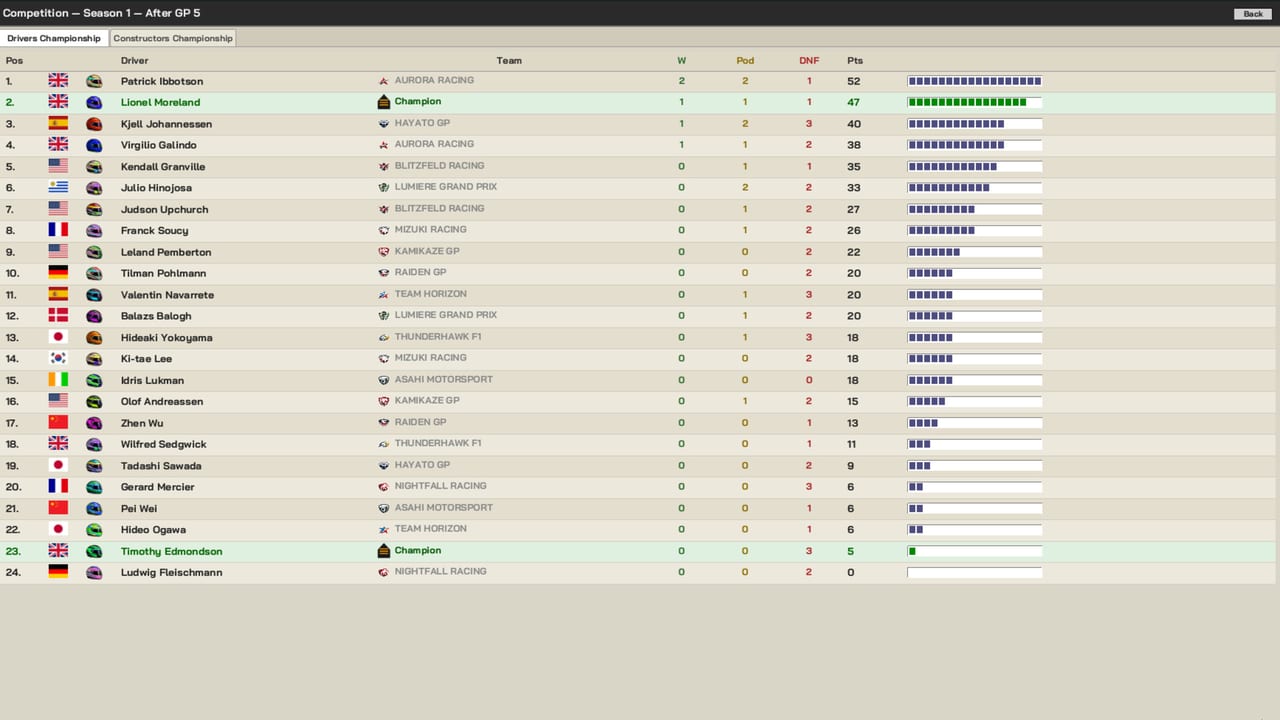
Signing a driver in The Undercut is a gamble until Scouting has paid for the truth. Fame is public. Overall rating, the six stats, salary bands, and personality traits are not. A cheap contract with red traits is not a bargain. This page is how the market works in Early Access 0.5.4, including the scouting-output triple that arrived with launch.
Seat management sits on the Drivers hub. Archetypes and red/green flags sit on driver traits. Home-grown talent sits on the academy. Use those with this guide instead of treating the market as a spreadsheet of names.
The six stats
Drivers carry INT, PAC, CON, ADA, STA, and AGG on a 1–20 scale, plus an overall rating. In race terms, intelligence shapes out-laps and fuel-save, pace is raw speed, consistency blunts mistakes and wear, adaptability handles car character and conditions, stamina holds a long stint together, and aggression feeds overtake attempts and the bill that comes with them. Until knowledge is high, those numbers render as ranges or question marks. Treat a ~14 as a band, not a fourteen.
Traits such as tyre whisperer, late braker, or hot head stagger in as knowledge rises. At low percent you see “undiscovered traits.” In the middle you get suspected cards. At full knowledge the polarity is named. Do not offer a Primary seat to a hot head you have not un-blurred.
Knowledge is a percent, not a vibe
Below a small threshold you see nothing. As percent climbs, the band around each stat narrows until the value goes exact. Overall rating lags the individual stats; you can know the six numbers and still see a ranged overall. Traits unlock one at a time across the same climb.
You always know something for free. A famous grid driver at a strong Scouting department starts with a useful baseline. An unknown teenager starts near zero. The baseline caps out: active observation is required to finish the job. Your own race drivers and academy prospects read at 100% and stay that way even after they leave. Knowledge ratchets up; it is never unlearned.
0.5.4 changed the economy of that climb. Scouting produces three times the Work Units per level: 45 per GP at level 1, 180 at level 10. Older alpha pages that quote 15 and 60 are stale. Capacity is still a rate, not a bank: you allocate Work Units per GP to observations, they tick on pre-season turns, Grands Prix, and free-weekend turns, and a finished 100% mission frees the allocation with a mail.
How to run an observation
Open Scouting from the sidebar or from an empty seat. Known Drivers is a long list: series, age, fame, likeness, status badges, salary range. Star the names you care about. Observations start on the profile, not from a blank mission board: assign Work Units in steps, preview Grands Prix to full, and do not sprinkle 5 Work Units across six targets. Finish one or two. A famous driver needs fewer ticks because the baseline is already paid. An unknown is expensive and is also where mispriced talent hides.
Two blockers catch rookies. Scouting is locked until you confirm infrastructure in pre-season phase 1, because capacity depends on the department level. And if free capacity cannot cover the minimum allocation, stop or reduce another mission first.
During the season the app is often view-only for offers. You can still run missions. Offers open in pre-season, in the GP-10 mid-season window (those deals apply next season), and when you hire after a fire or an injury gap. 0.5.4-2 fixed GP-10: you get three driver offers per turn, refreshed, with the remaining count shown — not three for the whole weekend. A driver under contract is no longer labelled Free Agent in Scouting → Missions. See hotfix notes. Refusals are remembered. A closed door is not a second quota burn; read the hover text.
Making an offer that can succeed
The dialog shows scouting-gated stats, asking salary or pay-driver incoming, a live acceptance percent, season cost, and any buyout. Acceptance cares more about ambition than about a 20% raise. A driver holding out for a top team will not be bribed into a backmarker Primary. Role matters: famous drivers hate Reserve, unknowns sometimes prefer it to nothing. Country match with your team and even your engine supplier adds a little. Standing and prestige add a little more.
Pay drivers flip the money sign: they bring cash, and demanding more of it lowers acceptance. Buyouts apply if they are under another series contract. The championship has an 18+ rule; seventeen-year-olds can pre-agree in the GP-10 window because the deal lands when they age up. Details on feeding that pipeline are on the academy page.
The AI shops while you think. Pre-season they sign. Rumours name who they are watching, including your own final-year drivers. Starting an observation can itself generate a rumour that you are running the rule over someone. Seats vanish. That is why you scout early and offer on a finished file, not on fame.
Reading the market without lying to yourself
Fame is never hidden. Signing the famous column is how you buy an expensive average. Likeness in the list is quoted for a Secondary seat; a Primary offer to a star is a different roll. Salary ranges hide below low knowledge and tighten as you learn. A released driver’s demand re-rolls from current stats, so a faded star is not forever expensive and a cheap rookie contract does not follow them forever.
Injuries in 0.5.3 mean a reserve is not a luxury. A concussion or a broken leg can remove a starter for one to five Grands Prix. Keep the third seat real, even if the name is unglamorous. Happiness on the career hub is a separate bar; a fast driver who hates the factory will still make your mail glow amber.
For who is actually worth the Work Units, use the driver tier list. For how a high-CON driver changes Soft cliffs, return to race strategy. For the department that sizes the scouting pool, stay in car development.
Scout the gap between baseline and 100%, not every name on the grid. Stop when stats are exact enough to bet a contract. Then spend the rest of the pool on the next unknown, not on polishing an overall rating you will never use.
Frequently Asked Questions
Quick answers for pitwall decisions, scouting, and career systems.
Why are all the stats question marks?
You have not bought the knowledge. Assign scouting Work Units on the profile. Famous drivers start with a baseline; unknowns do not. See the knowledge section above.
How many drivers should I observe at once?
One or two until they finish. Spreading the level-1 pool across a crowd teaches you nothing useful before summer.
When can I sign during the season?
After a fire or injury via Team → Hire, and during the GP-10 window for next-season deals. Quotas are tight. The academy is the other pipeline.
Did scouting Work Units change at launch?
Yes. 0.5.4 triples output per level. Ignore older 15/60 figures. Confirm on the 0.5.4 notes.